If you are buying your first home in Manhattan, Flatiron can feel like a tempting shortcut to the New York lifestyle you pictured. It is central, connected, and full of the kind of daily conveniences that make city living feel easy. But it is also a neighborhood where price, pace, and property type matter more than many first-time buyers expect. Here is how to tell whether Flatiron fits your priorities before you make your first move.
What living in Flatiron feels like
Flatiron is not a tucked-away residential pocket. It is a mixed-use district where business, shopping, dining, and home life all overlap.
According to the Flatiron NoMad Partnership, the district includes 36 million square feet of commercial space, more than 100,000 daily workers, over 35,000 residents, and more than 18.6 million visitors to the Flatiron Plazas in 2024. That helps explain why the neighborhood often feels active throughout the day and into the evening.
For many first-time buyers, that energy is part of the appeal. You get a neighborhood that feels plugged into the city, with errands, restaurants, public space, and transit close at hand.
If your ideal first home is calm, quiet, and clearly separated from office activity, Flatiron may feel less intuitive. The neighborhood tends to reward buyers who want convenience and momentum more than retreat.
Why location is a major draw
Flatiron sits in a highly connected part of Manhattan. That centrality can make your daily routine much simpler, especially if you expect to move around the city often.
The Broadway 23rd Street station serves the R at all times except late nights, the W on weekdays, and the N late nights and weekends. The 23rd Street station on Sixth Avenue serves the M on weekdays, and nearby 14 St-Union Sq gives you access to the L, N, Q, R, W, 4, 5, and 6.
There is also the PATH station at West 23rd Street and Sixth Avenue. PropertyShark also notes that the neighborhood has more than two dozen bus stops and limited parking, which makes Flatiron a more natural fit for transit-first buyers than for buyers who plan to rely on a car.
Green space balances the density
One reason Flatiron feels more livable than some buyers expect is its access to open space. Madison Square Park sits at the heart of the area and offers a real visual and physical break from the surrounding streets.
The park spans 6.2 acres, and the Flatiron Plazas at 23rd Street, Fifth Avenue, and Broadway add more public outdoor space right nearby. For a first-time buyer, that can be a meaningful quality-of-life factor, especially in a neighborhood with so much daytime activity.
What homes in Flatiron look like
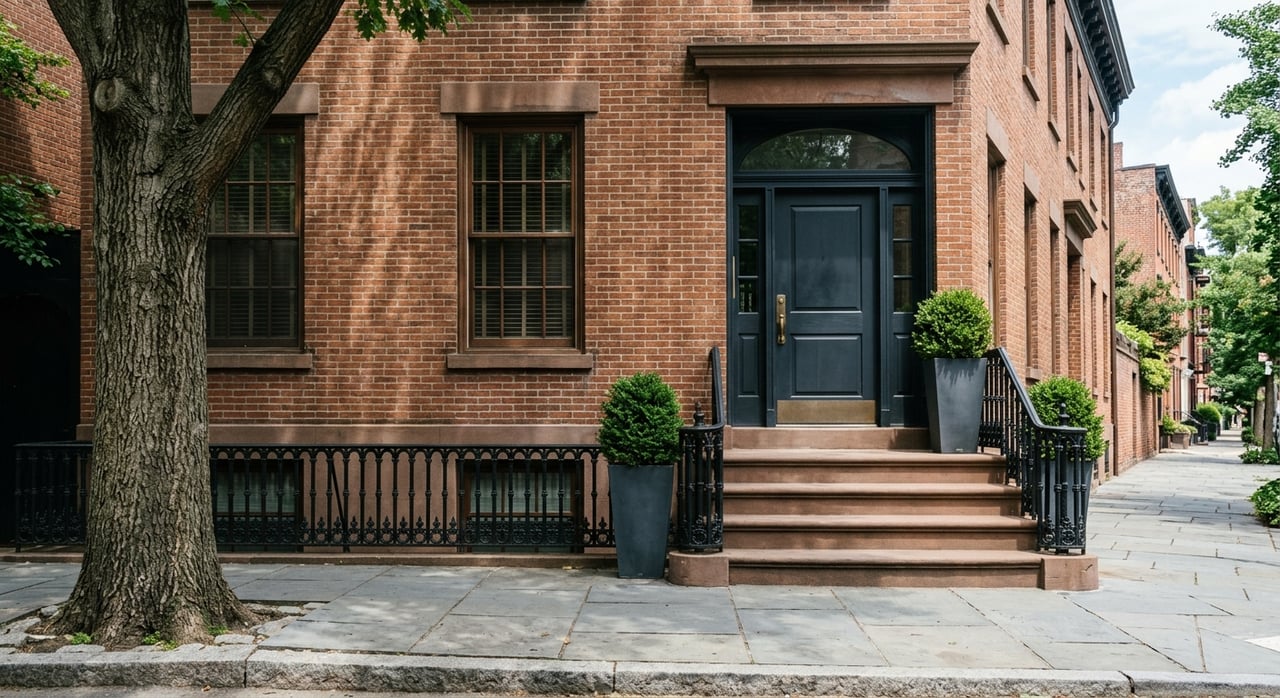
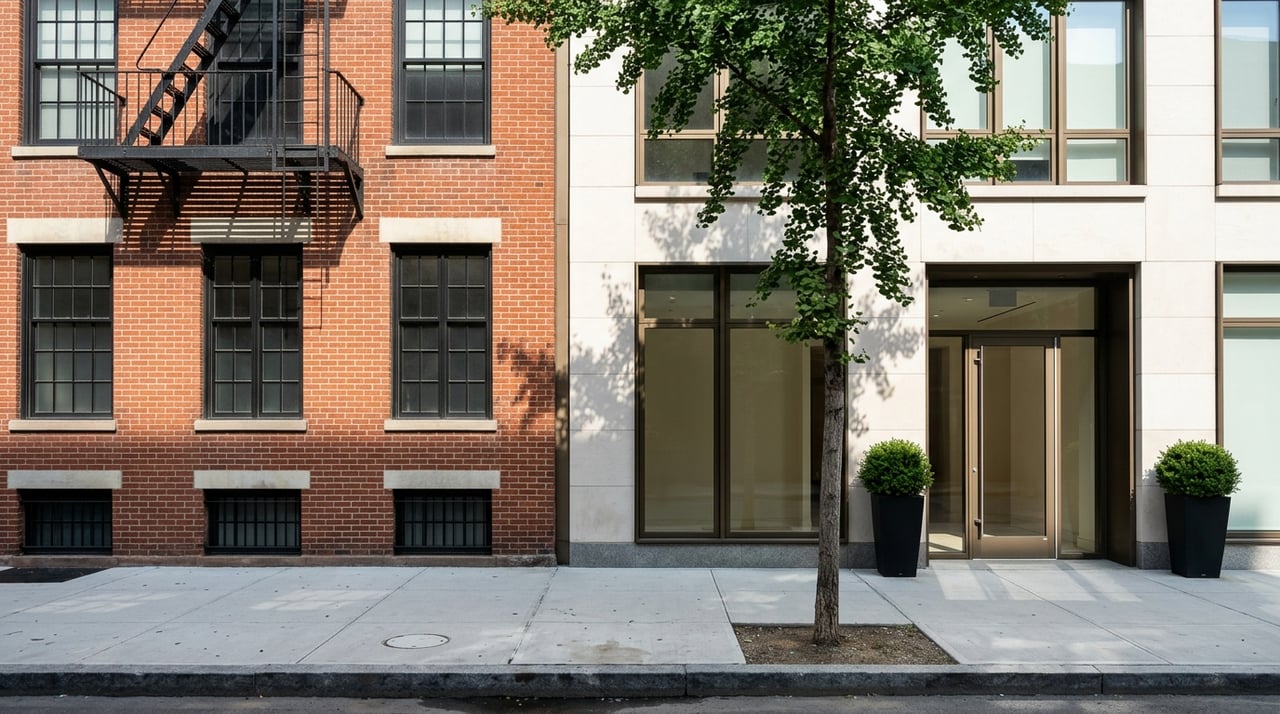
Flatiron does not offer one single housing style. Instead, you will usually find a mix of larger elevator co-ops, prewar co-op and condo conversions, and a smaller number of newer luxury buildings.
PropertyShark notes that most buildings in the district are no more than about 20 stories tall, while many side streets are lined with 3- to 6-story buildings. That mix can create a more layered streetscape than buyers sometimes expect from a central Manhattan neighborhood.
For a first-time buyer, the practical decision often comes down to co-op versus condo. In Flatiron, that choice can shape not just your budget, but also your timeline, paperwork, and long-term flexibility.
Co-ops often offer the entry point
If you want to buy in Flatiron without stretching into newer condo pricing, co-ops may be the most realistic path. The neighborhood includes several larger co-op buildings along with older co-op inventory that can be more value-oriented.
The May 2026 data from PropertyShark shows a median sale price of $919,000 for co-ops in Flatiron. That is a useful benchmark for first-time buyers trying to understand where the lower end of the local ownership market may begin.
Current listing snapshots in the research report show studio and small one-bedroom co-ops around the low-$500,000s to high-$800,000s, with examples at $515,000, $699,000, and $875,000. A larger one-bedroom co-op is listed at $1.095 million.
That does not make Flatiron cheap. It does mean that co-ops can create a more accessible first step than condos for some buyers.
Condos offer convenience at a premium
If you prefer newer finishes, more amenities, or a more straightforward ownership structure, condos may be more attractive. In Flatiron, they usually come at a much higher price point.
PropertyShark’s May 2026 snapshot puts the median condo sale price at $2.2 million. The same research report notes that one-bedroom condos commonly fall in the roughly $1.25 million to $1.9 million range, while two-bedroom homes quickly move into step-up pricing.
That gap matters if you are deciding between maximizing location and protecting monthly comfort. In Flatiron, condos can be compelling, but they often push a first purchase into a more aggressive budget.
Co-op ownership requires more diligence
For first-time Manhattan buyers, this may be one of the biggest practical considerations. In New York, buying a co-op means purchasing shares in a corporation tied to a proprietary lease, not buying real property in the same way you would with a condo.
The New York State Attorney General notes that co-op and condo purchases carry significant legal and financial consequences and recommends reviewing the offering plan carefully before signing. In plain terms, the co-op path can be smart value, but it usually asks more of you in paperwork, review, and preparation.
This is where strong transaction management matters. If Flatiron leads you toward co-op inventory, you want to be ready for a process that can feel more layered than many first-time buyers expect.
The price reality in Flatiron
Flatiron is not typically an entry-level Manhattan market. It is better understood as a neighborhood where your money buys location, access, and lifestyle, sometimes more than square footage.
PropertyShark’s May 2026 snapshot shows a neighborhood median sale price of $1.6 million, with a median price per square foot of $1,526 and 29 transactions. Manhattan’s median sale price in the same period was $1.3 million.
That puts Flatiron above the borough-wide median and places it in a higher pricing tier. For many first-time buyers, that means you need to be clear on what you are prioritizing before you start touring homes.
What you are really paying for
In Flatiron, a large part of the value is tied to daily ease. You are paying for a central address, strong subway access, nearby restaurants, walkable routines, and proximity to public space.
The Flatiron NoMad Partnership says the neighborhood dining guide includes more than 100 eateries, including healthy, vegetarian, and plant-based options. Its local resources also include a neighborhood fitness roundup, which speaks to how easily many residents can keep work, exercise, dining, and errands within a compact radius.
If that kind of convenience will meaningfully improve your day-to-day life, Flatiron may justify its pricing better than a lower-cost area that adds friction to your routine. If your top goal is maximizing space or minimizing cost per square foot, the tradeoff may feel harder to defend.
Who Flatiron tends to suit best
Flatiron is often a strong fit for first-time buyers who want to be in the center of things. If you value walkability, transit, polished surroundings, and easy access to daily essentials, the neighborhood checks many boxes.
It can also work well if you are open to a smaller footprint in exchange for a more seamless Manhattan lifestyle. Buyers who spend a lot of time outside the home often see this kind of trade as worthwhile.
Flatiron may be less compelling if you want the broadest possible inventory, the lowest possible price point, or a more clearly residential atmosphere. In that sense, the neighborhood is less about compromise and more about clarity on what matters most to you.
Questions to ask before buying here
Before you decide that Flatiron is right for your first Manhattan home, it helps to pressure-test your priorities. A few questions can quickly bring the decision into focus.
- Do you want a neighborhood that feels active throughout the day?
- Are you comfortable paying more for centrality and convenience?
- Would a co-op process feel manageable if it opened up better value?
- Are you prioritizing transit and walkability over driving and parking?
- Is access to restaurants, fitness, and public space part of your daily routine?
If most of your answers are yes, Flatiron may be a strong match. If not, the neighborhood may still appeal to you, but perhaps not as your best first purchase.
The bottom line on Flatiron
Flatiron can be an excellent first Manhattan home base if you want connectivity, convenience, and a distinctly urban rhythm. It offers a polished lifestyle and strong transit access, but it usually asks buyers to accept higher pricing and, in many cases, the complexity of a co-op purchase.
For the right buyer, that trade can make perfect sense. If you want a first home that places you close to your routines and in the middle of Manhattan, Flatiron deserves serious consideration.
If you are weighing Flatiron against other Manhattan neighborhoods, working with an advisor who understands pricing, co-op diligence, and neighborhood fit can save you time and sharpen your search. To discuss your options with a tailored, data-informed approach, connect with The Duck Kirsch Team.
FAQs
Is Flatiron a good neighborhood for a first-time Manhattan buyer?
- Flatiron can be a strong choice if you value central location, transit access, walkability, and a polished urban lifestyle more than maximum space or a quieter residential setting.
Are co-ops in Flatiron more affordable than condos?
- Based on the May 2026 data in the research report, Flatiron co-ops had a median sale price of $919,000 compared with $2.2 million for condos, so co-ops often provide a lower-cost ownership path.
What is the median home price in Flatiron?
- PropertyShark’s May 2026 snapshot puts Flatiron’s median sale price at $1.6 million, with a median price per square foot of $1,526.
What types of homes can you buy in Flatiron?
- Flatiron’s housing stock includes large elevator co-ops, prewar co-op and condo conversions, and a smaller number of newer luxury towers.
Is Flatiron convenient for commuting around Manhattan?
- Yes. The neighborhood has strong subway access, nearby PATH service, and more than two dozen bus stops, which makes it especially practical for buyers who rely on public transit.
Does Flatiron have parks or open space?
- Yes. Madison Square Park is a 6.2-acre public park in the area, and the Flatiron Plazas add more outdoor public space near 23rd Street, Fifth Avenue, and Broadway.