If you love the idea of soaring ceilings, oversized windows, and a home with real architectural character, Williamsburg loft-style living can be hard to ignore. But the label “loft” can mean very different things from one building to the next, especially in a neighborhood where industrial history and new development now sit side by side. If you are weighing a loft purchase in Williamsburg, understanding what you are really buying can help you make a smarter decision. Let’s dive in.
Why Williamsburg lofts stand out
Williamsburg’s loft identity is tied to the neighborhood’s industrial past. NYC Planning’s Greenpoint-Williamsburg framework describes an area shaped by older residential buildings, converted loft buildings, and industrial and commercial uses, with waterfront blocks that historically sat in manufacturing districts where new residential use was not permitted.
That history still shows up in the housing stock today. StreetEasy describes Williamsburg as a mix of new construction, brownstones, prewar buildings, historic properties, and converted loft buildings. For buyers, that means “loft-style” can refer either to a true conversion with original industrial details or to a newer condo designed to capture that look.
What loft-style living usually includes
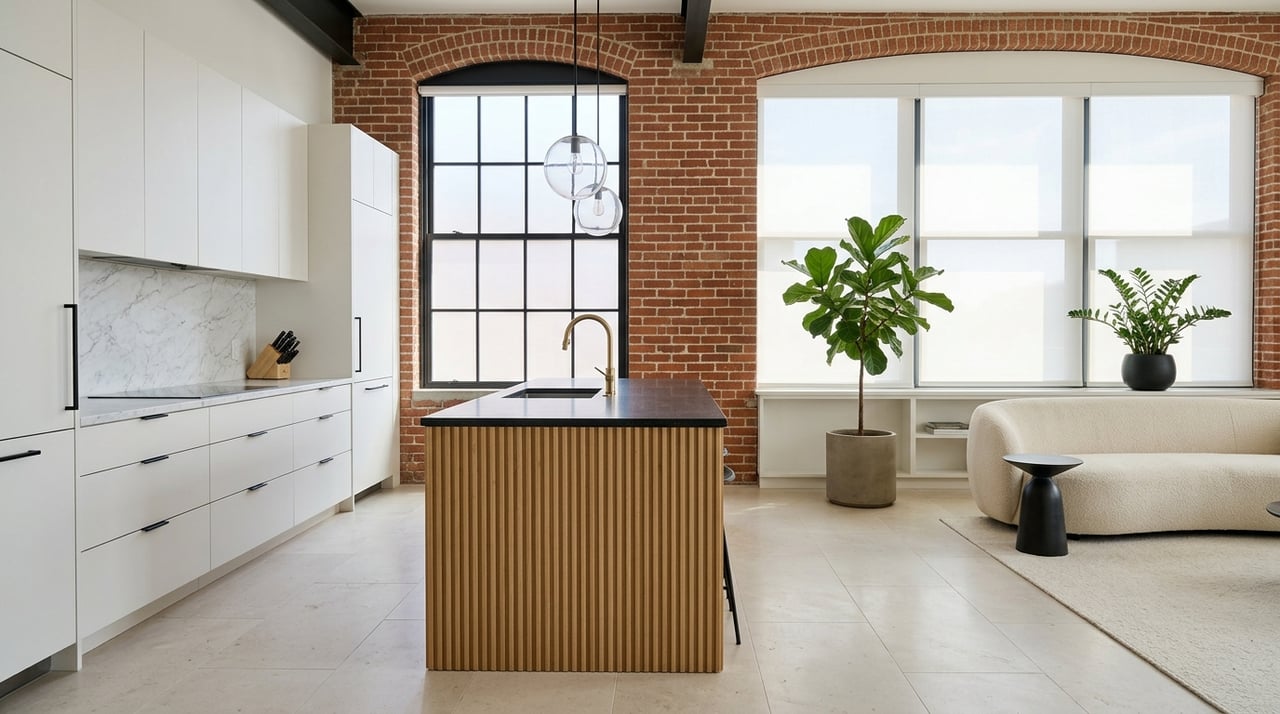
Many Williamsburg lofts prioritize volume, light, and visual character over traditional room separation. In local coverage of Williamsburg loft properties, common features include high ceilings, exposed brick, wood beams or columns, large factory-style windows, open layouts, and in some cases concrete or steel details.
That design language is a big part of the appeal. A loft can feel more dramatic and more flexible than a conventional apartment, especially if you value open entertaining space, a strong sense of scale, or design-forward interiors.
Common loft features buyers notice
When you tour loft-style homes in Williamsburg, you may see features like:
- High ceilings
- Exposed brick
- Historic beams or columns
- Hardwood floors
- Factory-style windows
- Open-plan living areas
- Concrete or steel accents
- Private or shared roof access
Some buildings also pair loft aesthetics with more polished finishes. Examples highlighted in market coverage include stainless appliances, farmhouse sinks, natural stone countertops, and upgraded common spaces.
Authentic loft vs loft-inspired condo
This is one of the most important distinctions to make before you buy. In Williamsburg, some homes are genuine conversions in former industrial buildings, while others are new-development residences that borrow loft styling but function more like a modern condo.
An authentic conversion may offer more original character and a stronger sense of place. At the same time, newer loft-inspired buildings may provide more predictable layouts, newer systems, and a more complete amenity package.
What can differ between the two
A converted loft may offer:
- Original architectural details
- Less conventional floor plans
- More variation from unit to unit
- Character that can be difficult to replicate
A loft-inspired new development may offer:
- Cleaner, more efficient layouts
- More uniform finishes
- Newer building systems
- Expanded amenities and services
Neither option is automatically better. The right fit depends on whether you prioritize authenticity, convenience, design efficiency, or long-term ease of ownership.
Layout tradeoffs to think through
Open space can feel exciting on first tour, but day-to-day livability matters just as much. Research on Williamsburg lofts shows that some layouts trade closet space, privacy, and room separation for a more dramatic, studio-like setup.
That can work well if you prefer flexible space and a minimalist setup. It may be less ideal if you work from home often, need substantial storage, or want clearly defined sleeping and living areas.
Questions to ask during a showing
Before moving forward, consider:
- How much usable wall space is there?
- Is there enough closet and storage space?
- Where does natural light actually reach during the day?
- Can the layout support privacy if needed?
- Does the open plan feel functional or just visually impressive?
A beautiful loft should still work for your routine. In this segment of the market, practical usability often matters as much as headline design features.
Williamsburg amenities vary widely
Amenity packages can differ more than buyers expect. Some Williamsburg loft buildings offer relatively simple services, while others include a more robust set of conveniences.
Local examples have included features such as virtual doorman service, video intercom, laundry on every floor, bike storage, shared roof space, rooftop gardens, barbecue areas, patios, bocce courts, and parking. That range matters because two homes with a similar loft look may offer very different ownership experiences.
Match amenities to price
When comparing properties, ask whether the building’s features support the asking price. A unit with strong character but limited services may compete differently from one with less architectural authenticity but more comfort and convenience built in.
In Williamsburg, buyers often pay a premium when a property combines light, ceiling height, efficient usable space, and a modern amenity package. The best value usually comes from finding the right balance rather than focusing on one standout feature.
How Williamsburg pricing compares
Williamsburg remains expensive by Brooklyn standards, but it still sits below the top Manhattan loft districts. StreetEasy shows a current Williamsburg median sale price of $1.5 million and a median base rent of $4,770.
StreetEasy’s 2026 buyer ranking placed Williamsburg at a median asking price of $1,787,500, down 15.6% year over year, with inventory up 17% year over year. At the same time, StreetEasy’s 2025 search data ranked Williamsburg No. 3 for both most-searched sales and most-searched rental neighborhoods, which points to durable buyer and renter interest.
Compared with SoHo, Tribeca, and DUMBO
For context, StreetEasy’s 2025 year-in-review placed SoHo at a $3,995,000 median asking price and Tribeca at $3,985,000. In Brooklyn, DUMBO posted a $1.7 million median sale price and a $5,795 median base rent.
That positioning helps explain Williamsburg’s appeal. It can offer loft-style inventory at pricing below premier Manhattan loft districts, while still overlapping with Brooklyn’s upper tier when a unit has strong light, views, finishes, and amenities.
Legal diligence matters with loft purchases
For loft buyers in New York City, legal status is not a minor detail. NYC’s Loft Board says Interim Multiple Dwellings, or IMDs, are former commercial, manufacturing, or warehouse spaces that lacked a residential certificate of occupancy and meet specific occupancy criteria.
If a building falls under the Loft Law, the Loft Board oversees legalization, annual registration, and compliance. That means you should confirm certificate-of-occupancy status and determine whether Loft Board involvement applies before treating the purchase like a routine condo or co-op transaction.
Why this step is so important
A loft can be visually compelling and still require extra diligence. Before you move ahead, you want a clear understanding of the building’s legal residential status and any related compliance issues.
For a buyer, this is not just about checking a box. Legal clarity can affect financing, risk, and future resale potential, especially in a market where some loft inventory comes from older industrial buildings.
Lifestyle fit is part of the value
A great loft is not only about what is inside the apartment. StreetEasy highlights the Williamsburg waterfront, outdoor public space, and NYC Ferry access as major neighborhood perks.
At the same time, StreetEasy notes that L-train dependence can be a downside for some residents. The neighborhood also has a strong concentration of restaurants, bars, culture, and late-night activity, which may feel energizing to one buyer and less appealing to another.
Think beyond the floor plan
When you evaluate a Williamsburg loft, consider how the neighborhood supports your routine. Ask yourself:
- How important is ferry access or proximity to the waterfront?
- How often will you rely on the L train?
- Do you enjoy an active dining and nightlife scene?
- Are you looking for a quieter day-to-day environment?
The right purchase is not just the right apartment. It is the right apartment in the right part of Williamsburg for how you actually live.
What supports resale potential
In a mixed market like Williamsburg, resale strength usually comes down to a handful of fundamentals. Based on the local inventory mix and buyer preferences reflected in the research, the broadest appeal tends to go to homes that combine legal clarity with features buyers consistently value.
Those features often include strong natural light, good ceiling height, efficient usable space, and conveniences that feel appropriate for the asking price. In other words, charm matters, but functionality and building quality matter too.
Loft features that tend to age well
If resale is part of your thinking, look closely at:
- Certificate-of-occupancy clarity
- Window size and light quality
- Ceiling height
- Storage and layout efficiency
- Building services and amenities
- Overall finish level relative to price
A loft with standout style and solid fundamentals often has a wider audience when it is time to sell.
A smart way to approach a Williamsburg loft search
Loft shopping in Williamsburg is rarely a one-size-fits-all process. The inventory can range from true industrial conversions with real texture to highly polished new residences that use loft language in a more contemporary way.
That is why a disciplined search matters. You want to compare not only aesthetics, but also legal status, livability, amenity value, and how the property fits within Williamsburg’s pricing landscape.
If you are considering a loft-style purchase in Williamsburg, careful guidance can help you separate what looks compelling from what is truly well positioned. For tailored advice on evaluating loft inventory in Brooklyn and across New York City, connect with The Duck Kirsch Team.
FAQs
What does loft-style living in Williamsburg usually mean?
- In Williamsburg, loft-style living can mean either a true converted industrial space with features like exposed brick, beams, and oversized windows, or a newer condo designed to mimic that aesthetic with more modern systems and amenities.
What should buyers verify before purchasing a Williamsburg loft?
- Buyers should confirm the building’s certificate-of-occupancy status and determine whether the property is subject to NYC Loft Board oversight, especially if it originated as a former manufacturing or warehouse building.
How expensive are Williamsburg lofts compared with Manhattan loft neighborhoods?
- Williamsburg is still expensive by Brooklyn standards, but research shows it generally sits below premier Manhattan loft markets like SoHo and Tribeca, while sometimes overlapping with high-end Brooklyn pricing depending on views, finishes, and amenities.
What are the main layout tradeoffs in Williamsburg loft apartments?
- Many lofts offer open space, high ceilings, and strong light, but some have less efficient storage, fewer defined rooms, and more studio-like layouts than a conventional condo or co-op.
What helps a Williamsburg loft hold resale appeal?
- Broad resale appeal usually comes from a combination of legal clarity, strong natural light, good ceiling height, efficient usable space, and amenities or finishes that align with the asking price.