If you are selling a SoHo loft, you are not just bringing another Manhattan apartment to market. You are selling volume, light, history, and legal clarity in one of the city’s most recognizable neighborhoods. The right strategy can help your loft stand out, attract qualified buyers, and support a stronger outcome. Let’s look at the marketing approaches that work in SoHo now.
Why SoHo lofts need a different strategy
SoHo lofts compete on more than square footage. The SoHo-Cast Iron Historic District covers 26 blocks and about 500 buildings, and New York City describes it as the largest concentration of full and partial cast-iron facades in the world. That architectural identity is a major part of what buyers are responding to when they shop in the neighborhood.
Today’s housing stock reflects that history. StreetEasy notes that SoHo includes historic cast-iron walk-ups, luxury co-ops, and former factory buildings that became the open-floor-plan lofts many buyers associate with the neighborhood. When you market a SoHo loft well, you frame it as a distinctive property with a story, not a generic luxury listing.
That matters because SoHo remains one of Manhattan’s highest-priced neighborhoods. StreetEasy reports a median sale price of $3.4 million and 55 median days on market, and its 2025 year-in-review ranked SoHo as Manhattan’s highest-priced sales neighborhood by median asking price at $3,995,000. In a market at that level, presentation and precision matter.
Lead with architecture and provenance
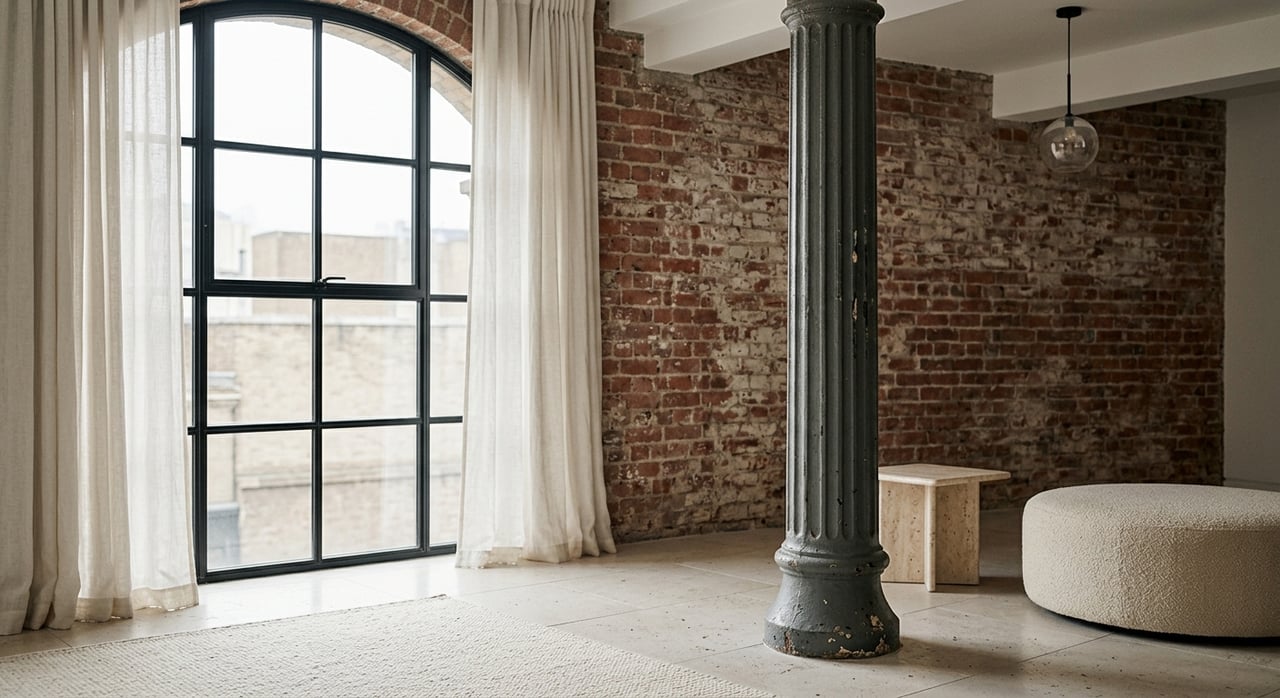
A strong SoHo loft campaign starts with what makes the home irreplaceable. Buyers often respond to details such as ceiling height, oversized window lines, open spans, original columns, and the quality of any renovation. In this neighborhood, those features are not background details. They are central to value.
If the building or unit has meaningful provenance, that should be handled carefully and clearly in the listing story. The landmark district’s history includes the conversion of former loft and manufacturing spaces into artists’ residences, studios, and galleries, and that evolution helped define SoHo’s identity. If your loft has a notable past use, original architectural features, or a thoughtful conversion history, those facts can add depth to the marketing.
The key is accuracy. Buyers in this market tend to notice when a listing leans too hard on vague lifestyle language and not enough on specifics. A better approach is to pair design-forward presentation with factual details that help a buyer understand what makes the loft special.
Get the legal story exactly right
In SoHo, the legal status of a loft can shape the buyer pool and the closing process. That is why one of the most effective marketing strategies is simple: be precise from day one.
Your listing should clearly reflect whether the property is standard residential, joint living-work quarters for artists, or subject to Loft Law or Interim Multiple Dwelling rules where applicable. New York City states that certified working artist status is necessary to qualify for joint living-work space in the M1-MA and M1-MB districts that serve SoHo and NoHo, and the 2021 SoHo/NoHo plan created a voluntary path from existing conforming JLWQA use to residential use. The city also notes that existing JLWQA occupancy may continue, but new conversions to JLWQA after December 15, 2021 are prohibited.
The Department of Buildings also states that Loft Board jurisdiction units may be occupied as residential use without artist certification. For sellers, that means legal occupancy history is not a side note. It should be reviewed early so your marketing, buyer conversations, and deal timeline stay aligned.
If your loft is in a landmarked building or historic district, pre-sale diligence also matters. New York City requires owners of landmarks or buildings in designated historic districts to obtain Landmarks Preservation Commission permits before certain work, including some window replacements, masonry repairs, and facade changes. If you have completed work, buyers may want to understand that history.
Build a launch package for how buyers actually search
Most buyers begin online, and the data is clear about what they care about first. Zillow’s 2025 consumer housing trends report found that floor plans were the most important listing feature for 33% of prospective buyers, followed by high-resolution photos at 26% and 3D or virtual tours at 20%. Written descriptions and video ranked lower.
That has a direct takeaway for a SoHo loft sale. Your launch package should not treat visuals as a supplement to the listing. They are the listing.
A strong package should usually include:
- A precise, easy-to-read floor plan
- High-resolution daylight photography
- A 3D or virtual tour
- Clear copy that explains layout, scale, window exposure, ceiling height, and renovation quality
- Accurate notes on use, occupancy, and building type where relevant
This approach fits both the neighborhood and buyer behavior. StreetEasy describes SoHo as crowded, visually distinctive, and busy with shoppers and visitors, especially on weekends. If many buyers are first experiencing your loft digitally, the online presentation needs to do the heavy lifting before a showing is ever scheduled.
Use staging to clarify scale and function
Lofts can be beautiful in person but confusing in photos if the space is too empty, too personalized, or poorly arranged. That is why staging is often one of the smartest marketing investments for a SoHo sale.
According to the 2025 staging survey from the National Association of Realtors, 83% of buyers’ agents said staging makes it easier for buyers to visualize a property as a future home, and 60% said it affects at least some buyers. The rooms most commonly staged were the living room, primary bedroom, and dining room.
For a loft, staging should help buyers understand how the open plan works. It can define living, dining, sleeping, and work zones without fighting the architecture. The goal is not to fill the space. The goal is to make proportion, flow, and function immediately legible.
This is especially important in SoHo, where many homes are in walk-up buildings or older structures with unusual layouts. A thoughtful setup can help buyers quickly see how daily life would fit into the home.
Price with discipline, not mythology
It is easy to overreach when a loft has character and a prestigious address. But strong marketing does not fix a price that is out of sync with current conditions.
Manhattan’s broader market still rewards disciplined pricing. Corcoran’s first-quarter 2026 Manhattan report said closings rose 1% year over year to 2,757, sales volume rose 4% to $6.2 billion, and days on market fell 9% to 110 days. Elliman’s fourth-quarter 2025 Manhattan report also found that luxury listing inventory fell to its lowest level in 15 years.
Those are constructive signals, but they do not support pricing by aspiration alone. In SoHo, the strongest pricing strategy is to measure your loft against recent loft comparables, current condition, legal use, renovation level, and building profile. Buyers paying at the top of the market still expect the numbers to make sense.
Time showings around neighborhood realities
SoHo’s streets are part of its appeal, but they can also create friction during a sale. StreetEasy describes weekends in SoHo as crowded with tourists and visitors, and that environment can make access, privacy, and first impressions more complicated.
For many lofts, weekday private showings may offer a better experience than broad weekend traffic. A quieter street, easier arrival, and a calmer building entry can help buyers focus on the home itself. Tightly managed access can also keep the space cleaner, more orderly, and easier to present.
Showing strategy should match the property. If the loft depends on light, architectural details, and a sense of calm, then timing matters. You want buyers to experience the space at its best, not during the noisiest moment on the block.
Tell a clean, credible story
In SoHo, polished marketing works best when it is paired with restraint. Buyers at this level often respond to confidence, clarity, and specifics more than exaggerated language.
That means your listing copy should explain what matters most:
- The scale and structure of the loft
- Window line and natural light
- Exposure and layout flow
- Original architectural details
- Renovation quality and finishes
- Building type and access considerations
- Any relevant live-work, JLWQA, or Loft Law history
A credible story builds trust. It helps buyers qualify themselves before they tour, and that can lead to better showings, cleaner negotiations, and fewer surprises later in the deal.
Why full-market exposure still matters
Even in a niche segment like SoHo lofts, broad digital visibility is essential. Zillow reports that 68% of prospective buyers had viewed homes for sale on a real estate website, and nearly half had already contacted an agent. Many had also been searching for six months or longer.
That means your ideal buyer may be watching closely long before they act. MLS syndication, brokerage-site presentation, and portal-ready photography should all be treated as core launch elements. If the listing appears incomplete or underproduced at the start, you may lose momentum with the very buyers most ready to respond.
The best strategy is coordinated from day one
Selling a SoHo loft successfully is rarely about one magic tactic. It is usually the result of several smart decisions working together: accurate pre-sale diligence, disciplined pricing, design-forward visuals, clear staging, thoughtful showing management, and a listing story rooted in architecture and facts.
That combination aligns with how buyers shop and how SoHo properties compete. In a neighborhood where character drives value, the strongest marketing strategy is one that presents your loft with both elegance and precision.
If you are preparing to sell and want a thoughtful, data-informed plan tailored to your property, The Duck Kirsch Team offers private, high-touch guidance for complex and high-value Manhattan sales.
FAQs
What makes marketing a SoHo loft different from marketing another Manhattan apartment?
- A SoHo loft is often valued for architecture, history, layout, and legal status as much as for size, so the marketing needs to highlight those details clearly.
What listing materials matter most when selling a SoHo loft?
- The most important materials are a precise floor plan, high-resolution photography, and a 3D or virtual tour, supported by accurate listing copy.
Why does legal occupancy matter when selling a SoHo loft?
- In SoHo, a loft’s occupancy status, such as standard residential, JLWQA, or Loft Law-related use, can affect who can buy it and how smoothly the transaction moves.
Should you stage a SoHo loft before listing it for sale?
- In many cases, yes, because staging can help buyers understand scale, define living areas, and visualize how an open-plan loft functions.
When is the best time to show a SoHo loft to buyers?
- Weekday private showings can work well because SoHo is often more crowded on weekends, which can affect access, privacy, and the overall showing experience.
How should you price a SoHo loft for today’s market?
- The most effective approach is to price against recent loft comparables, current condition, legal use, and renovation quality rather than relying on a generic luxury premium.