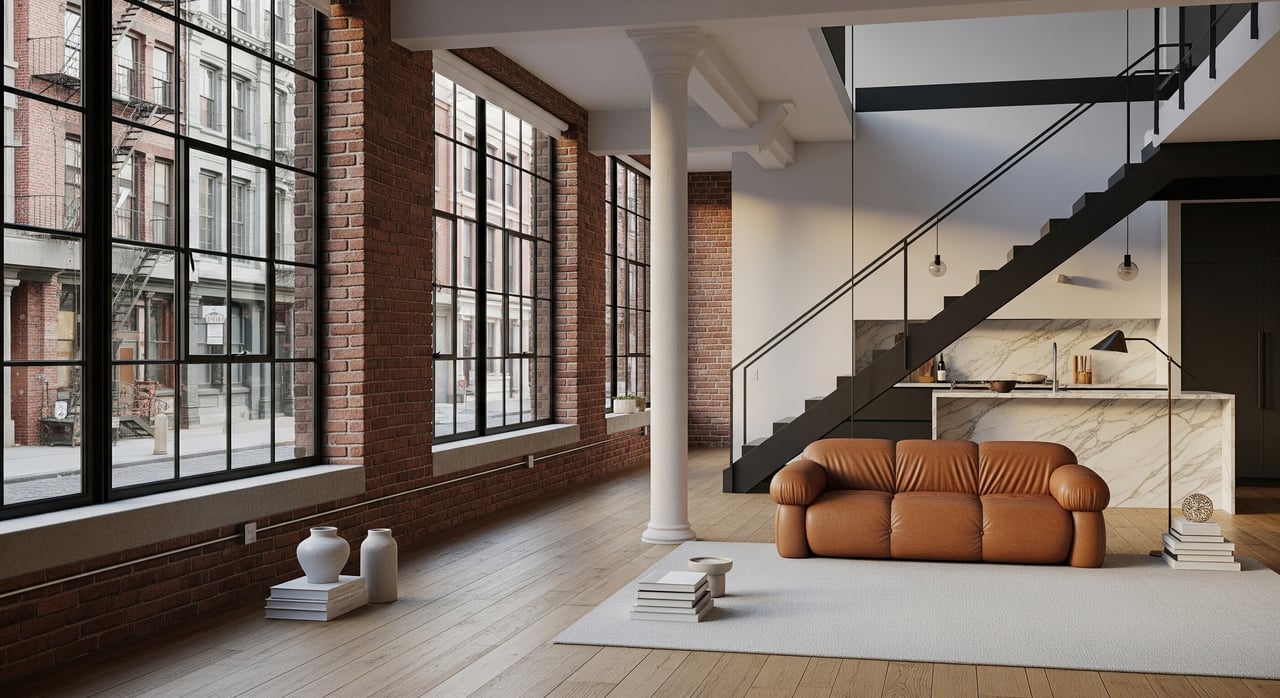
Craving sun-flooded rooms, towering windows, and the freedom to arrange your life in one sweeping space? If you are looking in SoHo, you have likely heard the phrase “true loft” and wondered what actually sets it apart. You want authenticity, but everyday livability matters too. In this guide, you will learn what a true SoHo loft is, how to recognize its defining features, the common trade-offs, and how to evaluate listings with confidence. Let’s dive in.
What a true SoHo loft means
A true loft is a home created from a former industrial or commercial space that keeps the bones of its original use. In SoHo, that usually means 19th or early 20th century cast-iron buildings that started life as manufacturing or wholesale properties. Many were later converted into live and work spaces by artists and design-minded residents.
SoHo is home to one of the largest collections of cast-iron architecture in the world. Much of the neighborhood sits within the SoHo–Cast Iron Historic District, where exteriors are protected and original proportions are often preserved. That is why so many SoHo facades feel cohesive and visually striking.
Residential use and conversions in these buildings involve a legal framework that buyers should understand at a high level. Building certificates of occupancy, past conversion processes, and compliance with building code determine whether a loft is legal residential space. The NYC Loft Board plays a role in issues tied to legalization of former industrial spaces. You should ask directly about the building’s residential status as part of routine due diligence.
Hallmarks you can see and feel
If you are touring listings, these are the features that most often signal a true SoHo loft.
Cast-iron facade and historic exterior
- Decorative cast-iron columns and bays define many SoHo buildings.
- Landmarked exteriors tend to keep original window openings and proportions.
High ceilings
- Ceilings commonly reach 12 to 16 feet or more, creating dramatic volume.
- Height changes light, acoustics, and how you plan fixtures and heating or cooling.
Column grid
- Evenly spaced cast-iron or heavy timber columns often run through the floor.
- Columns are a design feature and a planning constraint for furniture and partition walls.
Large, factory-scale windows
- Tall, wide multi-pane windows pull in deep daylight and neighborhood views.
- Older single-glazed steel or wood windows can affect thermal comfort and noise.
Open floorplates
- Few load-bearing interior walls allow sweeping, flexible layouts.
- Great for open living, studios, and entertaining, with options to add smart partitions.
Exposed structure and services
- Visible beams, joists, ductwork, piping, and sometimes original freight elements.
- Exposed brick is common and part of the aesthetic.
Raw or minimally finished interiors
- Unfinished concrete or plank floors and limited built-ins are typical in raw spaces.
- Many renovated lofts keep industrial character while adding modern finishes.
Building scale and unit size
- True lofts often span full floors or large half-floors in mid to large buildings.
- Newer “loft-style” units can mimic the look but lack industrial pedigree.
Everyday trade-offs to weigh
Living in a true SoHo loft is about character and volume, but there are practical considerations to weigh before you buy.
Space and layout
- Pro: Open rooms, flexible layouts, striking light and volume.
- Con: Fewer closets and less privacy without added partitions.
- Tip: Consider millwork walls, sliding panels, or raised platforms to define rooms while keeping sight lines.
Sound, vibration, and privacy
- Reality: Long sight lines and thin partitions can transmit noise between areas.
- Context: Older floors and shared ducts or elevator shafts can amplify sound.
- Tip: Test at different times of day and explore acoustic rugs, ceiling treatments, or strategic room dividers.
Thermal comfort and energy efficiency
- Reality: High ceilings increase air volume to heat and cool.
- Context: Single-pane windows and limited insulation can mean drafts.
- Tip: Ask about window upgrades and HVAC type, and plan ceiling fans or discreet split systems where allowed.
Storage and service spaces
- Reality: Original lofts often lack closets, pantries, and mechanical closets.
- Laundry: In-unit washers and dryers are not guaranteed in older conversions.
- Tip: Factor in custom built-ins or off-site storage, and confirm laundry options before you offer.
Building amenities and services
- Reality: Many true loft buildings are minimalist in services and amenities.
- Context: Some have passenger or freight elevators but may lack a doorman or gym.
- Tip: Confirm elevator type, move-in logistics, and any on-site management or superintendent.
Mechanical and maintenance considerations
- Reality: Older plumbing, electrical, and heating systems require attention.
- Context: Conversion quality varies and can affect comfort and insurance.
- Tip: Ask for documentation of building-wide mechanical upgrades and review recent assessments.
Regulatory and resale implications
- Reality: Certificates of occupancy and landmark restrictions can shape what you can change.
- Context: Fully legalized residential conversions are usually easier to finance and insure.
- Tip: Confirm legal residential status and understand board or building approval requirements for renovations.
Cost trade-offs
- Reality: Authentic SoHo lofts are scarce and can command a premium.
- Context: Ongoing maintenance or renovation investments may be higher than in newer buildings.
- Tip: Weigh long-term comfort upgrades against resale appeal of preserved character.
Authenticity vs practicality checklist
Use this checklist to evaluate any listing and guide your questions.
Visual and architectural checks
- Measure ceiling height in main living areas.
- Map the column grid and how it intersects with possible bedroom or office zones.
- Inspect window type and size, and note sill height and condition.
- Observe floors, beams, and any slope or settling.
- Identify facade material and whether the building sits in a landmark district.
- Compare the open plan to any added partitions to judge how much is original.
Mechanical and energy checks
- Note heating and cooling type, age, and whether systems are in-unit or central.
- Feel for drafts at windows and doors, and ask about window refurbishment or replacement.
- Confirm electrical panel capacity and any recent upgrades.
Building status, services, and logistics
- Ask if the building has a residential certificate of occupancy and how residential use is registered.
- Clarify elevator type, capacity, and move-in rules or fees.
- Confirm in-unit laundry rights and building or nearby laundry options.
- Ask about bike storage, lockers, or basement storage.
- Note presence or absence of a doorman, live-in super, or security.
Sound and privacy evaluation
- Visit during daytime and evening to assess street and neighbor noise.
- Listen near walls and ceilings to sense sound transmission.
- Ask about retail tenants, restaurants, nightlife, and mechanical noise sources.
Renovation flexibility and constraints
- If the exterior is landmarked, expect limits on window or facade changes.
- Review condo or co-op rules on subletting, renovations, HVAC installs, and approval timelines.
Smart questions to ask
- Is the unit in a building with a residential certificate of occupancy?
- What mechanical upgrades have been done in the unit and building?
- Are windows original and have they been refurbished or replaced with thermal units?
- What are policies for renovations, including HVAC and any exterior work?
- What do monthly charges include and are there planned capital projects or assessments?
- What are elevator capacities and standard move or renovation logistics?
Red flags to investigate
- Unclear or undocumented residential legalization.
- Window replacements that do not match historic openings.
- Patterns of complaints about noise, leaks, pests, or recurring system failures.
- Maintenance fees that seem unusually low alongside visible deferred maintenance.
SoHo market context today
True lofts with cast-iron facades and raw or minimally partitioned floorplates are relatively scarce in SoHo. That rarity, combined with architectural significance and location, contributes to pricing power and collector appeal. These homes attract buyers who value design, volume, and the neighborhood’s cultural history.
The neighborhood features a mix of landmarked cast-iron buildings, boutique condos, and co-ops. Some conversions are decades old and fully legalized, while others reflect a more individualized history. Landmark protections usually apply to exteriors, while interior work follows building approvals and city permitting.
For financing and insurance, lenders and insurers often look for proof of legal residential use and sound building systems. Strong building financials and a clear legalization history usually make transactions smoother. For resale, the broadest appeal often comes from renovations that preserve character while adding comfort, such as improved windows, modern HVAC, and well-integrated storage.
Is a true loft right for you
If you value volume, light, and the romance of living in a piece of SoHo’s history, a true loft delivers a unique experience. If you need turnkey storage, quiet like a library, and hotel-style amenities, you may prefer a newer loft-style condo. Many buyers land in the middle by choosing a true loft with thoughtful updates that preserve character and improve daily comfort.
The best path is to tour strategically, ask targeted questions, and understand each building’s story. If you want hands-on guidance through the nuances of certificates of occupancy, board rules, and renovation planning, we can help. Schedule a Private Consultation with Reynolds Duck to explore the right SoHo lofts for your needs.
FAQs
What defines a true SoHo loft compared to loft-style condos?
- A true SoHo loft is a residential unit converted from historic industrial or commercial space that retains core features like high ceilings, a column grid, large factory windows, and often a cast-iron facade, while loft-style condos mimic the look without the same industrial origins.
How do landmark rules affect SoHo loft renovations?
- Many SoHo buildings sit in a historic district, which typically protects exteriors, so changing window openings or facade details often requires approvals; interior work follows standard building and board processes.
Are true lofts harder to heat and cool?
- High ceilings and older single-pane windows can increase heating and cooling needs; buyers should review HVAC type, window condition, and insulation to plan comfort upgrades.
What should I ask about a loft’s legal residential status?
- Ask whether the building has a residential certificate of occupancy, how residential use was legalized, and what documentation is available for lender and insurance requirements.
How can I evaluate noise levels in a SoHo loft near retail or nightlife?
- Visit at multiple times of day, listen near walls and windows, ask about retail tenants and mechanical noise, and consider acoustic treatments or strategic partitions.
Do true loft buildings usually have doormen or amenities?
- Many authentic loft buildings offer minimal services and amenities, though some have elevators or on-site management; confirm the specific services and move-in logistics for each building.