Are you seeing “amenity wars” headlines and wondering what really matters in Flatiron? With prices and options at the top of the market, you want comfort and convenience without paying for features you will not use. In this guide, you will learn which amenities are now standard, which drive premiums, how they influence monthly costs, and a simple way to prioritize them for your lifestyle. Let’s dive in.
Flatiron luxury market snapshot
Flatiron sits among Manhattan’s higher‑priced condo neighborhoods, and buyers should expect multi‑million‑dollar medians for many full‑service buildings. Manhattan’s overall condo median hit about $1.66 million in Q4 2025, with average price per square foot near $2,099, according to Douglas Elliman’s Q4 2025 report. StreetEasy’s 2025 year in review places Flatiron in the top tier, with many full‑service condos clustering in the $1.5 million to $4 million range and trophy residences well above that.
New development remains a key slice of luxury inventory, and it tends to price higher than resale. That gap often reflects building age, finish level, and the scope of amenity suites, which are now a defining feature of Flatiron’s newest towers.
What you can expect today
Core security and convenience
In full‑service Flatiron condos, a 24/7 doorman or concierge, package rooms, and on‑site management are the baseline. Many buildings add bike storage and basic resident services. These essentials are part of why full‑service product commands a premium and why search interest for doorman and elevator buildings remains high per StreetEasy’s year in review.
Fitness and wellness
Most luxury buildings now include a well‑equipped fitness center. You will often see connected bikes, movement or yoga rooms, and small steam or sauna areas. Larger towers may add indoor lap pools and spa-style facilities. Fitness has been a must‑have since the pandemic, reinforced by buyer behavior tracked in StreetEasy’s 2025 analysis.
Outdoor and social spaces
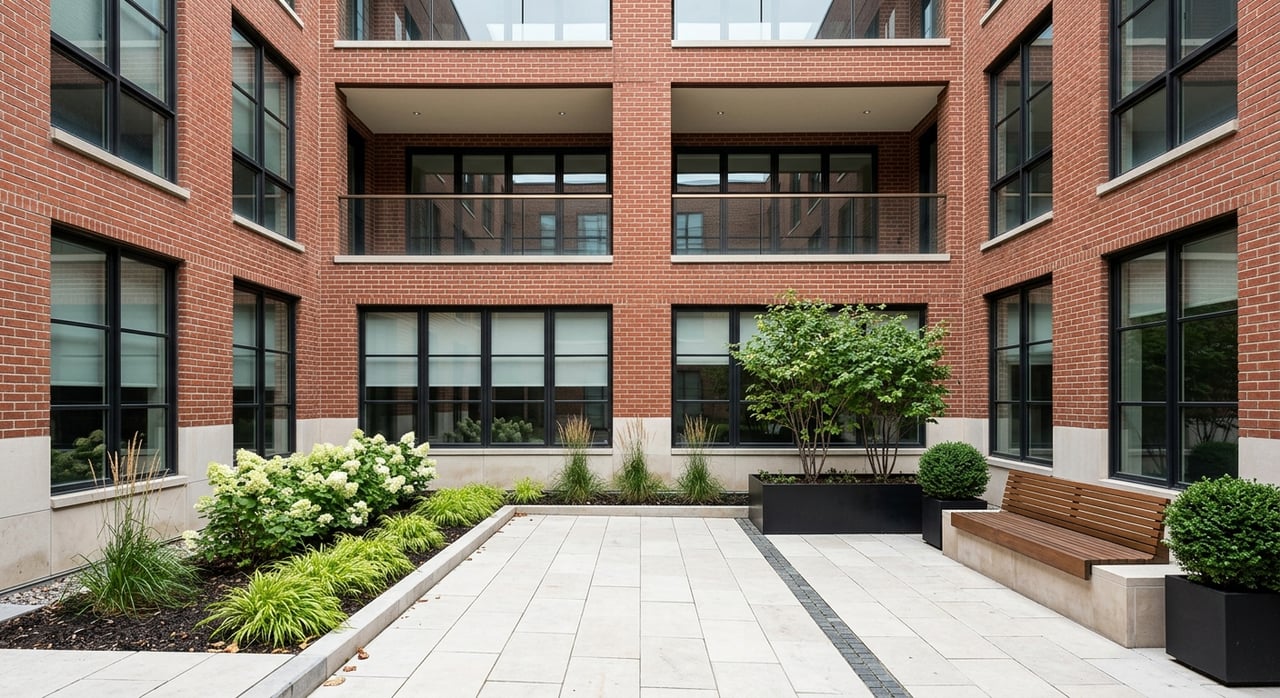
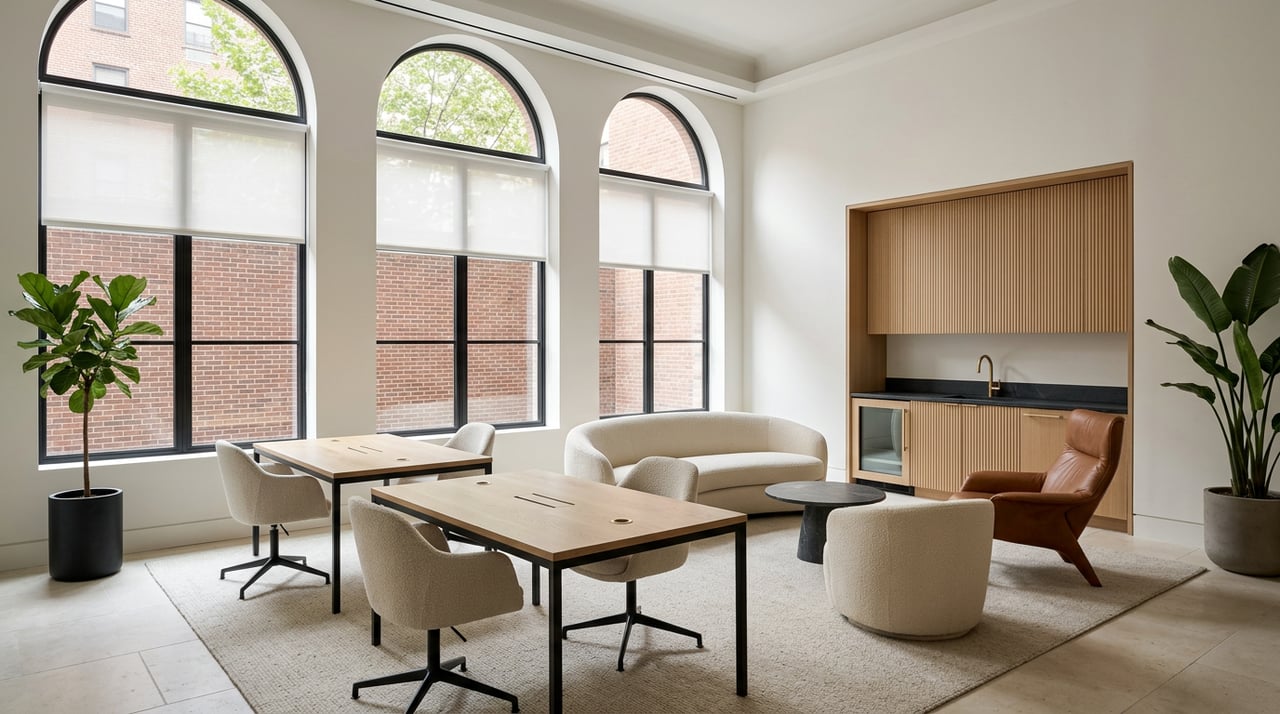
Landscaped roof decks, grilling stations, and resident lounges are common. Private or shared terraces are prized, given how scarce private outdoor square footage is in Flatiron. Expect many projects to highlight views and flexible hosting spaces, a trend that aligns with the rising search share for outdoor space in StreetEasy’s report.
Work‑from‑home amenities
Developers now design for hybrid work. It is common to find coworking suites, conference rooms, phone booths, and even podcast studios. These are positioned as long‑term features, not a fad, as remote work lingers in higher‑end buildings, per CNBC’s coverage of luxury coworking amenities.
Pet and family features
Dog‑wash rooms, small pet runs, children’s playrooms, and storage lockers are frequent. Pet amenities in particular help drive demand, which shows up in buyer search filters highlighted in StreetEasy’s 2025 review.
Trophy‑level extras
At the top end, you will see two‑story amenity floors, private screening rooms, wine rooms or temperature‑controlled wine lockers, staffed dining spaces with catering kitchens, full spa facilities, valet, and on‑site parking. These features cluster in the highest price bands and new towers, where amenity scale and staffing are most robust. Elliman’s data on new development pricing relative to resale supports this premium tier dynamic in Manhattan’s luxury segment (Q4 2025 report).
How amenities impact price and carrying cost
Amenities typically raise both your purchase price and your monthly budget. Newer, amenity‑rich product commands higher price per square foot, and it costs more to operate. Elliman’s reporting shows new development trading above resale, a signal that buyers pay for modern finishes and services (Q4 2025 report).
On the expense side, industry data show multifamily operating costs rose meaningfully in recent years. Yardi Matrix reported overall operating expenses growing about 7.1 percent year over year as of early 2024, with pressure from insurance and services, which feeds into HOA budgets and common charges (Yardi Matrix analysis). Buildings with pools, spa facilities, and high staffing levels will feel this most.
In Flatiron and adjacent Gramercy, monthly common charges vary widely by building type:
- Some boutique, less‑amenitized condos show combined common charges under $1,000 per month. For example, one resale in a full‑service condo displayed common charges around $784 per month at the time of marketing, which is on the low side for the area (example listing snapshot).
- Many newer or full‑service luxury buildings advertise common charges in the $1,500 to $2,500 per month range. One listing at Fifteen Madison Square North showed $1,543 per month in common charges, plus a temporary capital assessment that lifted the monthly outlay to about $2,120 during the assessment period (example listing snapshot).
- At the top end, penthouses with extensive amenities can show common charges above $3,000 to $4,000 per month. An upper‑tier Flatiron‑area penthouse listed monthly common charges of $4,019, illustrating the high‑amenity ceiling for carrying costs (example listing snapshot).
Fees change as boards adopt new budgets or short‑term assessments. Always verify the current year’s financials before you commit.
A quick 1,000‑square‑foot example
To compare options, look at the monthly carrying cost per square foot.
- Scenario A, boutique building: common charges of $900 per month on a 1,000‑square‑foot home equal $0.90 per square foot monthly for building services.
- Scenario B, amenity‑rich building: common charges of $2,000 per month on the same 1,000‑square‑foot home equal $2 per square foot monthly.
This simple view helps you weigh private space versus shared amenities. If you use the gym, coworking, and roof deck several times a week, Scenario B may feel like value. If you rarely use building spaces, Scenario A may be more efficient for your lifestyle.
A smart decision framework
1) Clarify use and timeline
Are you a full‑time resident who will use the gym, coworking rooms, and pet amenities daily, or do you prize larger private rooms and lower monthly cash flow? If frequent amenity use fits your routine, prioritize buildings with complete services. If you want more interior space and budget stability, a simpler building can make sense.
2) Compute your all‑in monthly
Look beyond list price. Add your estimated mortgage payment, monthly property taxes, common charges, condo insurance, and typical utilities. Then divide by your home’s interior square footage to get a true monthly cost per square foot. Compare this across finalists so you can see how building amenities change your real cost.
3) Think about resale and hold period
If you expect to sell in 3 to 5 years, newer amenity suites and fresh finishes can help attract the next buyer, which supports resale. Academic work on housing price drivers shows that building amenities are one of the features that get capitalized into sale prices (hedonic analysis summary). If your hold is long, review operating budgets and reserves to gauge the likely path of monthly dues.
What to ask before you sign
Request documents early and read them closely. Here is a focused checklist for Flatiron condos:
- Current operating budget, last 2 to 3 years of budgets, and the most recent audited financials. These show how staffing, insurance, utilities, and amenities drive the numbers. Ask which line items move the budget most year to year.
- The latest reserve study, the percent‑funded metric, and any scheduled capital projects or planned assessments. A strong reserve lowers the risk of surprise charges (reserve study basics).
- Board meeting minutes from the last 12 to 24 months. Look for repeated discussions of large projects, amenity renovations, or assessments that could affect future costs (NYC condo and co‑op guide).
- A written schedule of what common charges include: staffing levels, utilities, heating and hot water, concierge platforms, gym or pool maintenance, and any third‑party contracts. Clarify if any amenity has a separate fee or membership requirement.
- Usage rules and capacity limits for coworking rooms, roof decks, and dining spaces. Some buildings use reservation systems or charge modest fees for private bookings, as noted in CNBC’s coverage of amenity use policies.
Price and amenity bands to expect
- Entry or boutique full‑service: Studios and smaller one‑bedrooms often start in the high six figures to low $1 millions in Flatiron and nearby Gramercy. You will usually see a doorman, a small fitness room, and a roof deck. It is possible to find common charges under roughly $1,200 per month in smaller boutique examples, as seen in a snapshot with about $784 in monthly charges (illustrative listing).
- Core luxury, roughly $1.5M to $3M: Expect a full concierge, larger fitness center, landscaped roof deck, resident lounge, and a business or coworking room. Common charges commonly run in the mid‑$1,000s to low‑$2,000s. One listing showed $1,543 in common charges plus a temporary assessment that brought the monthly outlay near $2,120 during the assessment period (illustrative listing).
- Upper or trophy luxury, above $3M to $4M and beyond: Look for two‑floor amenity suites, lap pools, private dining and screening rooms, full spa programs, and valet or parking. Carrying costs often exceed $2,500 per month and can reach $4,000 or more in standout penthouses (illustrative listing).
Final takeaways
- Amenities are part of the value formula. Newer, amenity‑rich condos tend to trade at higher price per square foot and carry higher monthly dues, a pattern supported by Elliman’s Q4 2025 metrics.
- Operating costs are rising. Budget for the possibility of higher dues over time, given industry expense trends reported by Yardi Matrix.
- Your usage should guide the tradeoff. If you will use the gym, coworking, and roof deck weekly, an amenity premium can be worth it. If you want more interior space and a leaner monthly, consider boutique full‑service.
If you would like a shortlist tailored to your lifestyle, building financials decoded in plain English, and a side‑by‑side cost comparison, connect with Reynolds Duck for a private consultation.
FAQs
What amenities are most popular in Flatiron luxury condos?
- Doorman and elevator access, in‑unit laundry, fitness centers, roof decks or private outdoor space, and now coworking or business rooms rank high in buyer searches, per StreetEasy’s 2025 year in review.
How do amenities affect monthly condo fees in Flatiron?
- Larger amenity suites and higher staffing levels raise operating costs, which show up in common charges. Local listing snapshots show ranges from under $1,000 per month in leaner buildings to $1,500–$2,500 in core luxury, and $3,000–$4,000+ at the trophy level (examples here, here, and here).
Are coworking spaces in condo buildings a passing trend?
- No. Developers are delivering dedicated coworking rooms, phone booths, and meeting spaces as long‑term amenities for hybrid workers, as reported in CNBC’s coverage of luxury building coworking.
How can I check if a building’s reserves are strong enough?
- Ask for the most recent reserve study, percent‑funded figure, and the current operating budget. Review board minutes for upcoming projects or assessments. These steps are standard parts of due diligence (reserve study overview, NYC condo guide).
Do amenities help resale value in Flatiron within 3–5 years?
- Often yes. Newer finishes and desirable amenities can support demand at resale. Academic research shows amenities are one of several features associated with higher housing prices (study summary).